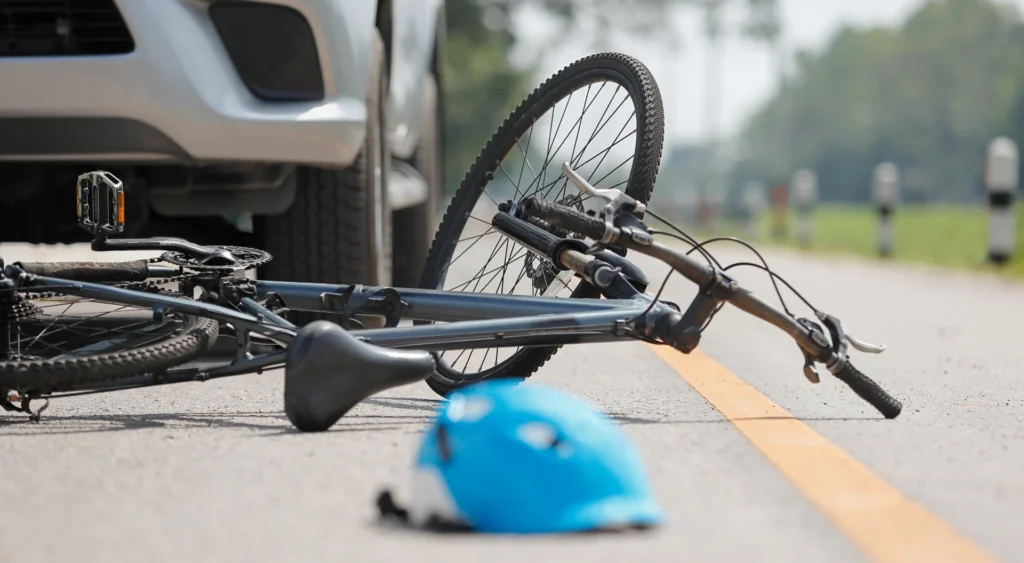
If you or someone you love was struck while walking, a pedestrian accident catastrophic injury in Ontario can change your life in seconds. You’re likely facing surgery, long rehab, and lost income, all while an insurance company decides how much your claim is worth. Those worries are valid, and they’re exactly the right things to be thinking about right now. This guide explains what makes an injury catastrophic, why fault works differently when a pedestrian is hit, and how the evidence you gather early can protect what you’re owed.
What Counts as a Catastrophic Injury in a Pedestrian Accident in Ontario?
A catastrophic impairment is the most serious injury classification under Ontario’s no-fault insurance rules, and it unlocks the highest level of benefits available. Those rules are set out in the Statutory Accident Benefits Schedule, or SABS, the provincial regulation that governs the benefits every injured person can claim after a motor vehicle accident. Reaching this designation matters because it changes how much money is available to fund your recovery.
The SABS lists eight categories of catastrophic impairment, and you only need to meet one.
- Paraplegia or tetraplegia
- Severe impairment of ambulatory mobility, severe impairment of the use of an arm, or an amputation
- Permanent loss of vision in both eyes
- A traumatic brain injury in an adult, measured against a defined outcome scale
- A traumatic brain injury in a child under 18, assessed against criteria written for children
- Physical impairments that together reach 55 percent or more whole person impairment
- Physical and mental or behavioural impairments that together reach 55 percent or more whole person impairment
- A mental or behavioural impairment rated as marked in at least three areas of function, or extreme in one
For pedestrians struck by a vehicle, the most common routes are traumatic brain injuries, spinal cord injuries, amputations, or a combination of orthopedic injuries that together reach a high level of whole person impairment. Many of these cases involve severe traumatic brain injuries or spinal cord injuries that need lifelong care.
That impairment level is measured using the AMA Guides, the American Medical Association’s standardized system for rating how much a permanent injury affects the whole body. They are an American publication, but Ontario adopts them directly, and the SABS requires assessors to use the fourth edition, published in 1993. Under one category, combined physical impairments of 55 percent or more can qualify as catastrophic. Because pedestrians absorb the full force of a collision, their injuries frequently cross this line.
| Benefit tier | What it can cover |
|---|---|
| Non-catastrophic | Up to $65,000 in combined medical, rehabilitation, and attendant care, generally for up to five years |
| Catastrophic | Up to $1,000,000 in medical and rehabilitation benefits, plus expanded attendant care and other supports |
Who Is at Fault When a Pedestrian Is Hit in Ontario?
When a pedestrian is struck by a vehicle on a public road, Ontario law presumes the driver is at fault. Under section 193 of the Highway Traffic Act, this reverse onus means the driver must prove they were not negligent, rather than you having to prove they were. It’s one of the few areas where the law leans in the injured person’s favour.
That presumption doesn’t make your claim automatic. Insurers often argue contributory negligence, the legal idea that you share part of the blame, for example by crossing outside a crosswalk or stepping out between parked cars. Contributory negligence doesn’t erase your claim, but it can reduce your compensation by your share of fault. Even where a pedestrian was partly careless, courts frequently assign shared responsibility rather than deny recovery, especially when a driver was speeding or not paying attention.
This is exactly where evidence decides the outcome, and where insurers work hardest to shift blame onto you.
Two Claims Run Side by Side: Accident Benefits and a Tort Action
After a serious pedestrian collision, you generally have two separate claims, and they run at the same time. The first is your accident benefits claim under the SABS, paid by an auto insurer no matter who was at fault. If you don’t own a car, you can still claim through the driver’s insurer, or in some cases through another policy.
The second is a tort action, a lawsuit against the at-fault driver for losses your benefits don’t fully cover, such as pain and suffering and long-term income loss. To claim pain and suffering damages, your injuries must pass the threshold, a legal test that requires a permanent and serious impairment of an important physical, mental, or psychological function. Our explainer on the serious impairment threshold test breaks this down further.
If the insurer denies your catastrophic designation or cuts off benefits, the dispute is decided by the Licence Appeal Tribunal, or LAT, the provincial body that resolves SABS disagreements. Strong medical evidence is what carries you through that process.
Building the Evidence for a Catastrophic Pedestrian Injury Claim in Ontario
The difference between an approved catastrophic designation and a denied one is almost always the quality and completeness of the evidence. Here’s how to organize it. For a printable version, see our catastrophic injury claim checklist.
Medical Records and Diagnostic Imaging
Collect hospital records, operative reports, and imaging such as CT and MRI scans. These document the injury and its severity, and they anchor the AMA Guides rating. Keep every specialist’s report, because catastrophic files often turn on a physiatrist’s or neurologist’s findings.
Evidence From the Scene and the Vehicle
Photographs of the crossing, skid marks, the vehicle’s position, and any dashcam or nearby security footage help establish how the collision happened. Police reports and witness names support the fault presumption and counter contributory negligence arguments.
Proof of Income and Future Care Needs
Pay stubs, tax records, and employer letters show income loss. Reports from occupational therapists and life-care planners document the attendant care, home modifications, and long-term treatment your recovery will require.
Records of Insurer Examinations
Insurers can require you to attend their own medical assessments. Understanding how insurer medical examinations work helps you prepare, because these exams are often used to dispute your injuries.
How Insurers Fight Catastrophic Pedestrian Claims
Insurers rarely accept a catastrophic designation without a fight, because the difference between the two benefit tiers is enormous. They may schedule their own examinations, question whether your injuries are permanent, challenge how your whole person impairment was calculated, or argue that chronic pain or psychological symptoms aren’t as severe as your doctors say.
They may also lean hard on contributory negligence, suggesting you weren’t visible, were distracted, or crossed improperly. This is why the adversarial reality matters: you have one recovery to fight for, and the insurer has a team doing this every day. Levelling that field is the whole point of getting advice early and documenting everything.
Every case is different, so you should consult a lawyer about your specific situation before making decisions about your claim. You can learn more about how these files are handled on our pedestrian accident claims page.
Frequently Asked Questions
How much compensation can a pedestrian get after being hit by a car in Ontario?
Compensation varies widely because it depends on the severity of your injuries, your income loss, your future care needs, and the share of fault assigned to each party. Catastrophic cases involving brain or spinal injuries can reach the highest benefit and settlement ranges, while less severe injuries settle for far less. No lawyer can promise a specific amount, because each case turns on its own facts and evidence.
Who is at fault when a pedestrian is hit by a car in Ontario?
The driver is presumed to be at fault under section 193 of the Highway Traffic Act, which places the burden on the driver to prove they were not negligent. This reverse onus favours pedestrians, but insurers can still argue you share part of the blame. Your compensation may be reduced by your percentage of fault, though it is rarely eliminated entirely.
What is considered a catastrophic injury in Ontario?
A catastrophic injury is one that meets one of the eight categories defined in the Statutory Accident Benefits Schedule, such as paraplegia, severe traumatic brain injury, loss of a limb, or 55 percent or more whole person impairment. You only need to satisfy one category to qualify. The designation is a legal and medical test, not just a description of how serious an injury feels.
Can I claim benefits if I don’t own a car or have insurance?
Yes, in most cases you can still claim accident benefits even if you don’t own a vehicle or carry auto insurance. When a motor vehicle is involved in the collision, you may claim through the at-fault driver’s insurer, and other options may apply if the driver was uninsured or unidentified. A lawyer can help identify which policy responds to your claim.
How long do I have to file a pedestrian accident claim in Ontario?
Deadlines are strict, and missing them can bar your claim entirely. Accident benefits have short notice periods measured in days, while a tort action against the at-fault driver generally must be started within two years of the accident. Because the timelines differ, it’s wise to get advice as soon as you can.
A catastrophic pedestrian injury reshapes your life, and the claim behind it is complex, adversarial, and evidence-driven. You don’t have to face the insurer alone. To talk through your situation with someone who handles these cases, Schedule a Free Consultation with our team.