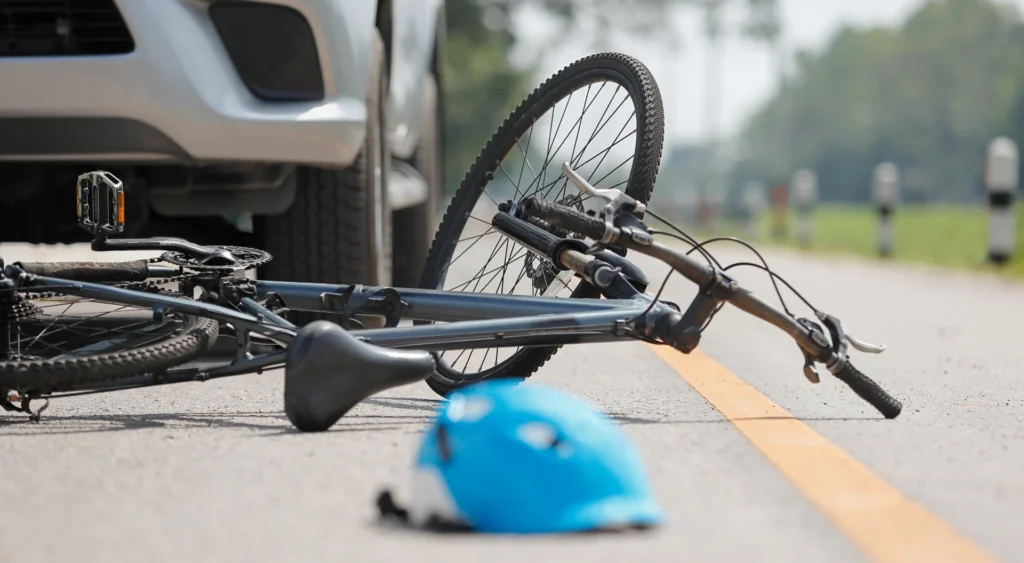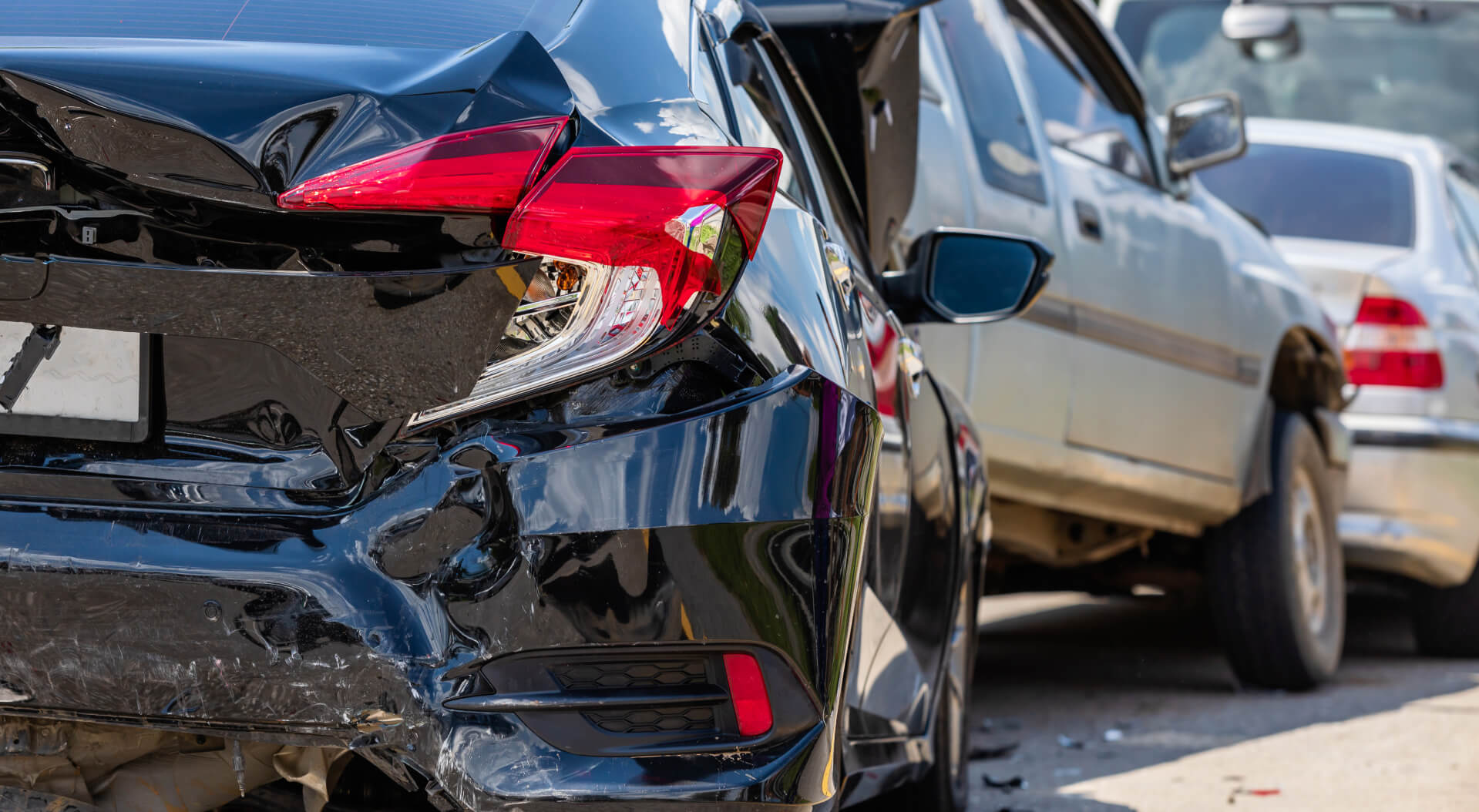
Picture this scenario. You are driving in the middle lane of the 401 in Toronto. Suddenly a car cuts off a transport truck causing the driver to swerve into your lane, clipping the front of your car. You then swerve into the lane next lane over and end up side-swiping another car. That car then loses control and hits the car behind you. The car behind them can’t stop in time and rear-ends them. This is now an accident involving five vehicles. Who is at fault? How at fault are you? How does this affect your ability to receive compensation?
Multi-car pileups are devastating for road users and complicated for insurance companies. This article will be your guide to Ontario’s multi-car crash fault rules. We will help you understand fault determination in multi-car pileups and what it means for pileup accident claims.
How Fault is Determined in Ontario
In Ontario, fault is determined using the Fault Determination Rules outlined in the Insurance Act. These rules include over 40 scenarios that cover almost every possible car accident and detailed instructions on how fault should be determined for each driver.
After an accident, the insurance companies of the parties involved will investigate the accident to build an understanding of how it happened. After investigation, drivers are deemed to be 0%, 25%, 50%, 75%, or 100% at fault depending on the situation.
In Ontario, you file the accident claim with your insurance provider. The percentage of fault assigned to you will determine how much of your damages will be covered under your direct compensation–property damage (DC-PD) coverage. DC-PD coverage pays for damages in accidents where another party is at fault. You are responsible for paying for the remaining damages out of pocket unless you purchased collision coverage.
Determining Fault in Multi-Car Pileups in Ontario
Multi-car pileups are difficult to assess. Situations are complicated and several insurance companies are involved. The investigation will be thorough and may take longer to conclude than a simple two-vehicle accident.
Typically, fault is determined for each collision independently where possible. However, the Insurance Act highlights a few specific scenarios involving multiple vehicles.
Ontario Multi-Car Crash Fault Rules for Common Scenarios
Multi-Car Rear Ends
The Fault Determination Rules explicitly highlight two scenarios involving three or more vehicles involved in rear-end collisions. In these scenarios, vehicle A is in the front, vehicle B is in the middle, and vehicle C is approaching from behind. This scenario can be extended to include more than three vehicles, but the rule is the same. Fault is only between cars that touch.
Scenario 1: All vehicles are in motion when vehicle C hits vehicle B, causing vehicle B to vehicle A.
- Collision between A and B: A is 0% at fault, B is 50% at fault, C is not applicable
- Collision between B and C: A is not applicable, B is 0% at fault, C is 100% at fault
Scenario 2: Only Vehicle C is in motion when the collision occurs.
- Collision between A and B: A is 0% at fault, B is 0% at fault, C is not applicable
- Collision between B and C: A is not applicable, B is 0% at fault, C is 100% at fault
Pileups
The Insurance Act also specifies how fault is determined in multi-car pileups where three or more vehicles are going in the same direction, traveling in adjacent lanes. To explain, we again have vehicles A, B, and C, this time traveling adjacent to each other.
In these scenarios, for each collision involved between two vehicles fault is 50% for vehicle A, 50% for vehicle B, and 50% for vehicle C.
Other Multi-Car Accidents
The above rules for multi-car collisions will cover a lot of possible accidents, but pileups are complicated. To get a clear understanding of fault in a multi-car crash police will question drivers and witnesses involved to begin compiling a thorough report. Insurance companies will then conduct their own investigation to attribute fault according to the information available, fault rules, and case law.
Fault in Ontario does not add up to 100%. Several drivers can be deemed at fault at the same time and for multiple collisions in the pileup.
What are the Legal Implications of Multi-Car Accidents?
Multi-car pileups can make the legal maze following an accident much more complicated. The first step after an accident should always be to seek medical attention for your injuries and to file an accident report with your insurer as soon as possible. The Statutory Accident Benefits included in your insurance policy will help cover medical costs and other expenses associated with your injury. Read more about what is covered by accident benefits here.
Tort Claims and Assessing Liability
After an accident, you may also be able to file a tort claim against the at-fault parties. Multi-car accidents can make the process more complicated, with several drivers potentially carrying some of the liability for the accident.
If you want to pursue a lawsuit against the liable parties, you should contact a car accident lawyer as soon as possible. You will need the expertise of a lawyer to represent you in negotiations and help you navigate the complex legal process.
Implications for Victims
The unfortunate result of the legal complexities of pileups is that it can affect victims’ abilities to seek compensation for their injuries. Statutory Accident Benefits will be available to insured drivers. However, if you get in a pileup with an uninsured driver, this could potentially impact the accessibility of the Motor Vehicle Accident Claims Fund–a fund created to help victims receive benefits if injured in an accident with uninsured drivers.
Pileups also make accessing compensation through tort claims more difficult and can potentially impact the amount of compensation you receive. Working with an experienced car accident lawyer is invaluable if you are thinking about filing a tort claim after a multi-car pileup. Because of the complexity of multi-vehicle accidents, understanding how the fault determination rules in Ontario apply to your case is essential for protecting your rights and securing compensation.
Contact Zayouna Law Firm for Help with Your Car Accident Claim
The lawyers at Zayouna Law Firm are dedicated to helping victims in Toronto and the GTA after car accidents. Our lawyers have decades of experience representing car accident victims in complex cases. You can count on us to look out for your best interests and do everything in our power to help you receive fair compensation for your losses.
Whether you need help understanding the claims process, representation in a tort claim for a multi-car pileup, or anything in between, our team is here for you. Contact Zayouna Law Firm to schedule a free initial consultation to discuss your case with one of our trusted lawyers.